THE IMPORTANCE OF CONTEXT
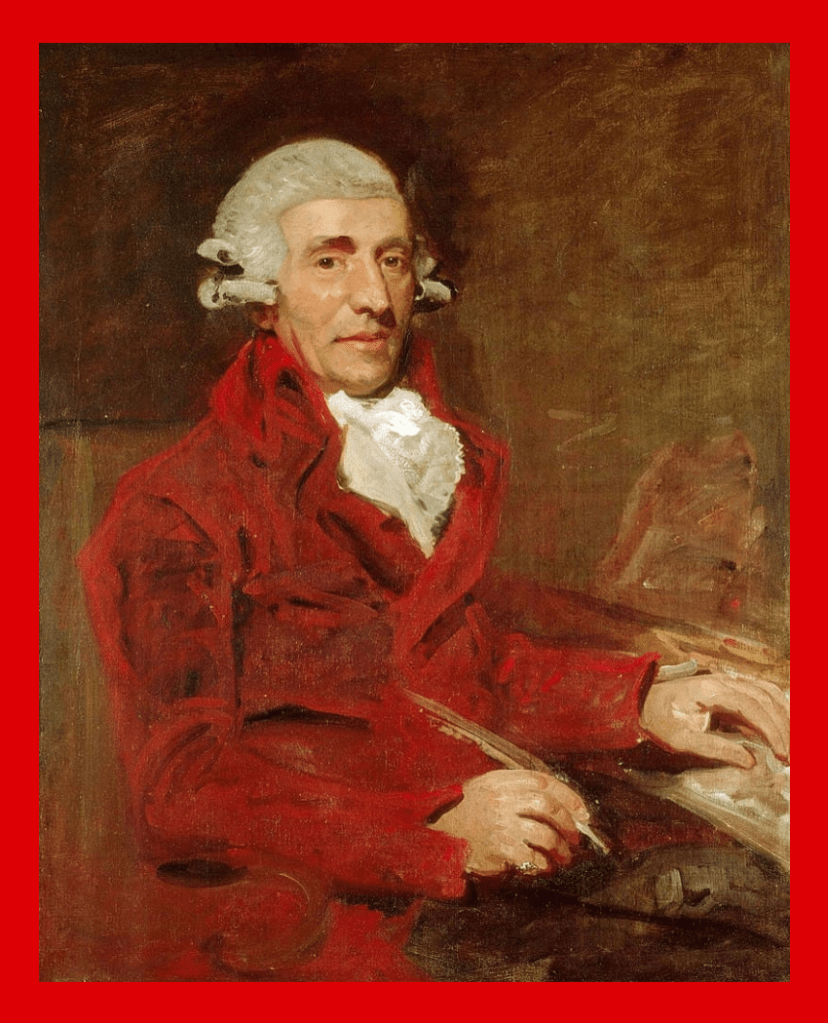
(painting: “Haydn In London” by John Hoppner)
THE OTHER DAY while driving someplace I listened to a classical music station. A serious-voiced commentator discussed a Joseph Haydn symphony which premiered in London in 1794. The radio host read from newspaper reviews of the concert, published the day after, which raved about the work, its drama and explosiveness. Then followed a recording of the symphony itself.
The piece was underwhelming. Unexceptional, even dull. Definitely no “Carmina Burana”!
What does that tell us?
Beyond the possibility that the problem was me: Two things.
1.) An art changes. A musical work considered thrilling 230 years ago won’t be looked at the same way today, after many innovations in the classical genre, and especially outside it. Which is the point: peak achievement for one set of critics could appear obsolete at a later date, or another time and place.
2.) The problem may be the critics. Those who wrote the gushy reviews the next day. They represented a sliver of their society. The standard audience size in London at the time for renowned symphonies was 800 persons of refined taste and breeding. Aristocrats and aristocrat wannabes. The critics’ opinions reflected them, not the general population.
Context is everything.
Does a similar situation afflict the U.S. literary world in 2025? The audience may not comprise, at its highest levels, quite as narrow a segment of society as Haydn fans, then or today. But literary writing sure doesn’t speak to a broad swath of society either.
Should it? The stance of the New Pop Lit project says, Yes, it should. Which leaves a canyon-sized hole in the art for writers with imagination and smarts to jump through.
–Karl Wenclas
Discover more from Fast Pop Lit
Subscribe to get the latest posts sent to your email.
