
LESSONS FOR WRITERS?
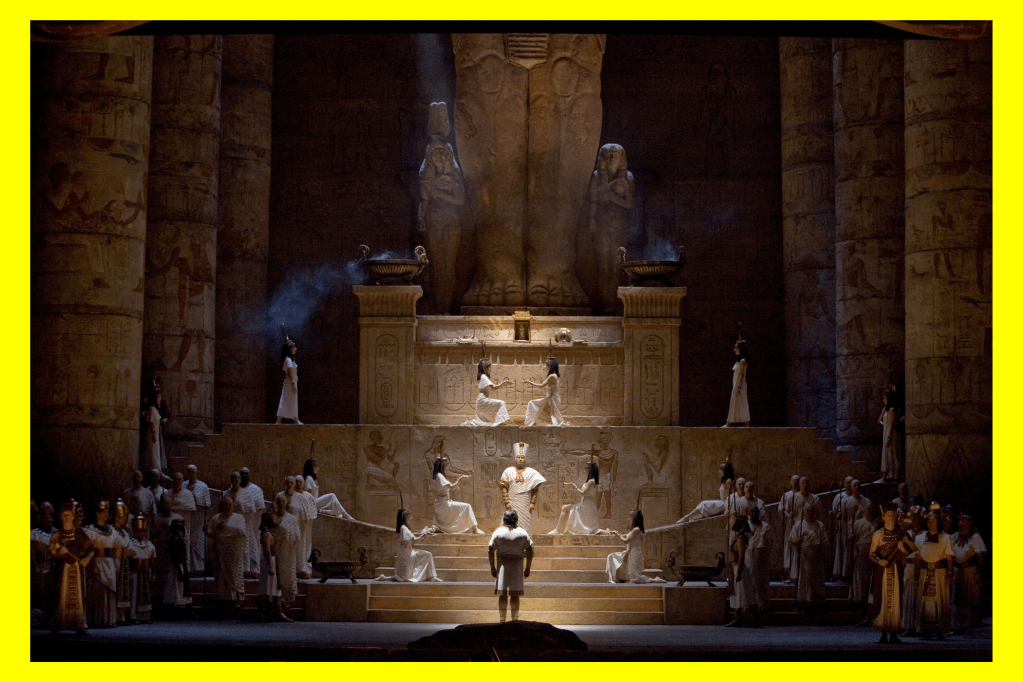
RECENTLY, my co-editor Kathleen and I watched a DVD recording of the Verdi opera Aida. A performance at New York City’s Metropolitan Opera from 1988, starring Aprile Millo and Placido Domingo. We were reminded how great opera, especially grand opera, can be at its best.
We’d seen the opera before, live, twelve or so years ago when we both worked at the Detroit Opera House. We’d heard the amazing voices carrying through the building from the rehearsal hall in the days leading up to the start of the run. It was a wonderful production in its own right, care of artistic director David Dichiera, albeit scaled down from what audiences saw at the Met. But it was live!
Live opera is not only ten times better than any recorded version, it’s likely– when at its best– the greatest of all art forms, because it encompasses so many arts and crafts in a single production. Music, staging, singing, story, acting, costumes, lighting, sets and set design. Often, dancing.
The Met production we watched had all of this and more. Including giant statues. Including horses pulling chariots. (Alas, no elephants!) It also had drama, magnificent voices, and large amounts of emotion. The first two acts are the high points: the aria “Celeste Aida” then the invocation of the gods in Act One, transporting the viewer back to an ancient, mystical-spiritual world via some of the most beautiful music ever composed. Act Two is power and spectacle, the gathering of the Egyptian army accompanied by rousing gigantic voices meshing together in a way seldom, if ever, experienced. All while the plot’s traumatic, anguished triangle is on display for all to see. The curtain comes down.
The final two acts are quieter, more personal and emotional– or melodramatic– one taking place along the Nile, under the stars; the universe. The other, in a dungeon.
Then it’s over. A full, cathartic artistic experience.
This was as fine a production as could be mounted, absent real pyramids and actual elephants. The acting of course was stagey, at times drifting into WWE-style dramatics, especially in the performance of Dolora Zajick as bad-girl princess Amneris.

LESSONS
What are the lessons from Aida for writers, particularly novelists?
That literary works need far more scope than they have now, and more humanity. In response to AI-generated botbooks, human writers need to express more passion, more tangible emotion. Enough of vague, cautious subtleties! Instead: pure drama. Characters need to pour out their pain, love and grief– to explode out of today’s technocratic aesthetic box turning all of us into sociopathic robots. Literature needs to lead us out of that box. Out of all restrictive, constipated boxes. Then it will become once again relevant. Once again vital to the culture. To all of us.
-KW
