–and their potential influence on literature.

Graphic novels and comic books aren’t taken seriously by literary people, even though they’re an offshoot of the novel (19th century melodrama; early 20th century pulp fiction), and are a gateway for many readers to the novel.
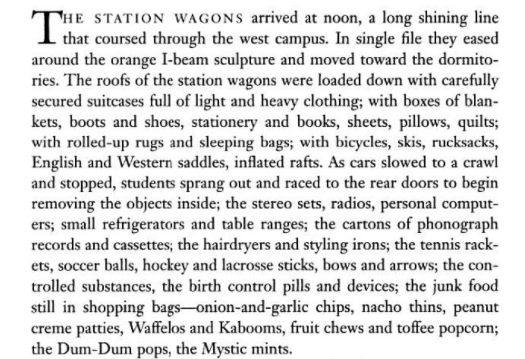
The basic building block for the narrative comic book is the panel. Mini-paintings or portraits, usually with words added. When they’re not, the stand-alone illustration is meant to make a point– to emphasize a key plot moment, even depict the story’s climax. The result: interconnected micro-chapters. Dialogue is used sparingly but well. The graphic novel embodies the principle of “less is more.” A single sentence or lone illustration carries meaning beyond itself. The technique works on not spelling everything out. On not having to spell everything out, a principle used first by impressionist painters, impressionist music composers like Debussy, and by 20th century modernist writers Georges Simenon and Ernest Hemingway.
“It wasn’t by accident that the Gettysburg Address was so short. The laws of prose writing are as immutable as those of flight, of mathematics, of physics.” -Ernest Hemingway
Ernest Hemingway was heavily influenced by Impressionist painter Paul Cezanne. Like Stephen Crane, Hemingway saw literature as a visual art.
USING THE TECHNIQUE
JUST AS the comic book/graphic novel was an outgrowth of popular novels, there’s no reason why serious fiction writers can’t in turn be influenced by the graphic novel. “The graphic novel without graphics.”
Ways to do this:
1.) More striking, over-the-top characters.
2.) More dramatic plots.
3.) Short mini-or-micro chapters, to emphasize each plot moment– and to keep the narrative moving at a faster pace than traditional literature. All part of what I call multidimensional writing.
ADVANTAGES OVER GRAPHICS
What graphic novels can’t do is get inside the heads of their characters. This can be used in multidimensional writing, as in traditional fiction, without going full Henry James-Virginia Woolf “stream of consciousness.” One of the failings of contemporary writing is the trend toward alt-lit/autofiction-style solipsism, which often as not cuts out the actual world: the tragedies and happenings of now. Which is a shame, given today’s contentious chaotic happenings begging to be intelligently addressed with understanding, compassion and outrage.
One of the strengths of multidimensional fiction is the ability to present a variety of viewpoints, quickly switching between them for a rounded, three-dimensional effect.
As we’ve begun doing with some (not all) of our writing. Including the just-released novella, The Loud Boys— now available in ebook form at Amazon. Print version coming soon.
-Karl Wenclas