Science Fiction– Or Fact?

A SNEAK PREVIEW EXCERPT OF AN UPCOMING STORY BY ZACH SMITH


I’ve been waiting for you for a long time, said Xarlox, as he reached out a beam of energy, that by a certain definition could be described as a hand, toward the probe.

Welcome home.

This relatively little rock, out in the vast outskirts of your solar system, this almost insignificant ball of ice, could be your final resting place.

It has been a long time for you at least. One hundred ten years since you were born, eighty-six years since your discovery, nineteen years since your death. Earth years I should say, less than half a year for this planet.

(Part of a feature story appearing soon at New Pop Lit.)

Cultural Optimists and Pessimists

IF 3-D Thinking means viewing a phenomenon from different vantage points, I’ve been doing that by simultaneously reading two recent books examining the state of American culture.

Derek Thompson

One, Hit Makers by Derek Thompson, published in 2017, examines culture from the standpoint of marketing experts and consumers. According to the data and the algorithms, all is as it should be– more increased technological tools lead to increased cultural efficiency, with what the public wants (whether they know it or not), quickly selected and brought to the front of the pack.

Scott Timberg

The other book, Culture Crash by Scott Timberg, I’ve already referenced, here. Timberg takes a broader view, putting culture into context as part of larger societal trends marginalizing the middle class. The culprit? Culture treated as content designed to adhere to profit-loss statements, instead of as art.

The difference between the two approaches is exemplified by their discussions of the music industry. “That the top 1 percent of bands and solo artists now earn about 80 percent of all music revenue” Derek Thompson sees as a good thing, due to “a lot more honest” ways of identifying and tracking hit records. Meanwhile, in his discussion of “the music industry’s one percent,” Scott Timberg abhors the phenomenon– and attributes it in part to corporate consolidation and the monopolization of radio by Clear Channel beginning in 1996.

To Thompson, Max Martin– one of the Swedish “superproducers” behind scores of hit records– is a musical genius. “The construction of a pop song is almost mathematical,” he quotes a Max Martin protege as saying. (A similar mindset to those in 2023 promoting the creativity of AI?)

Timberg discusses a different-but-similar Swedish producer, Lukasz Gottwald aka Dr. Luke, and uses a quote from John Seabrook to describe him: “He can make a song that’s also a business plan.”

They’re discussing the same phenomenon, the same technique, but with different opinions about it. Scott Timberg:

But this isn’t democracy– it’s the kind of monopoly capitalism Theodore Roosevelt hated, dressed-up with bling and low-cut jeans. As for hope: synthed-out with gang choruses, or purplish and overwrought over lost love, Dr. Luke’s songs sound like the music piped into the waiting room in hell.

In his book, Scott Timberg is almost relentlessly pessimistic about the state of the culture industry today, blaming the imposed-from-on-high, winner-take-all reality of it. Derek Thompson– the optimist of this examination– celebrates winner-take-all, as maybe he should, as he became a staff writer at prestigious The Atlantic magazine– owned by billionaire Laurene Powell Jobs– at age 23. (The same magazine, incidentally, which sided with billionaires’ yachts over orcas during the recent dispute in sea lanes between the two groups.)

XXX

What of myself? Where do I stand? Though I generally side with Timberg, critic of the status quo, over its defender, Thompson, I consider myself an optimist. It’s because our culture today is so monopolistic, one-note, and bland; run by data-oriented techies– so extreme in its security and complacency– that it’s set itself up for a mighty fall; data, algorithms and all. In this complex universe strength is weakness, weakness strength. Something unexpected and new will come along to topple the smugsters– and all their AI technology, focused on the now, on what is, will leave them unprepared for it.

KW

(But what do you think?)

3-D Thinking: An Intro

HERE are two credible books about the music business. Both books examine that business as it existed in the 1980s. Most of the focus, for both, is on rock music in Southern California. Yet there are only two slight points of contact between them. Were it not for those two points, one would think the authors lived in alternate universes.

The reason for this is that, even though the books cover the same subject, they come at that subject from different directions, and target different levels of the industry at that place and time. Fredric Dannen’s perspective is strictly top-down, examining the operations of monopolistic record company giants like CBS Records and Warner Brothers. Jim Ruland’s viewpoint is from the bottom, depicting the struggles of punk rock bands and the actions of grassroots startup enterprisers attempting to build businesses via promoting new bands and fresh music.

To truly understand rock music at that time and place, the observer needs both perspectives. Like seeing a mountain from more than one side– or viewing the dark side of the moon as well as what’s facing us. The three-dimensional viewpoint.

One view is not more valid than the other. That Fredric Dannen covers the more financially successful end of the music business doesn’t mean that end is more worth study, or historically important, or that music and its well-hyped acts more meaningful. If anything, the indy music scene Jim Ruland depicts in his book was more innovative and influential– at least as far as rock music is concerned– than the status quo acts promoted by the money-grabbing “Hit Men.” The indy music scene embodied by SST Records led to the rise of grunge in the 1990s– of bands like Nirvana, Soundgarden, and so many others.

Which causes us to question literary history, canons and such. Are academics giving us the full picture of literature over the course of decades– or not in fact only an acceptable sliver of everything happening?

The idea of narrow viewpoints should cause us to question all histories. Not throwing out standard (or revisionist) narratives, but supplementing them, to give the fullest possible picture of ideas and events.

-KW

The Literary Establishment’s Maginot Line

It’s funny to see reactions to the emergence of ChatGPT and other AI happenings. An increasing number of writers– especially on the low end– have embraced it as a way to get more “product” out there. Doesn’t matter to them if they can generate a novel in a day, or if it’s not at all any good. If it qualifies in their mind as a novel, that’s enough. Some–like the editors at New Pop Lit— are opposing the gathering onslaught. Meanwhile, a large number of writers, particularly those in or connected to the literary establishment, are ignoring it.

One can liken them to the French army in 1940. At war with Nazi Germany, yet believing they were safe behind a supposedly impregnable series of forts known as the Maginot Line. The forts were a psychological barrier more than anything– false security which enabled the French not to have to think about that which awaited just outside the gates, so to speak– and which swiftly with the roar of dive bombers and tanks came racing through the Ardennes Forest to spread terror and mayhem.

Similarly, literary people don’t want to think about AI chatbots. They believe they’re safe, and can wish the devices and the change they bring away. An illusory dream– writers are nothing if not dreamers.

Most out-of-touch of all are literary critics– those you’d assume would be most on top of things. Instead, they’ve tricked themselves into believing they represent a Golden Age of American literary criticism (I’m not making this up). A Golden Age nobody’s heard of, consisting of writers nobody knows. The height of insularity and arrogance. It’d be like the Essenes– authors of the Dead Sea Scrolls– circa 30 AD designating their inscrutable writings and themselves as a Golden Age.

The reality? I think of auto exec Bob Lutz’s remark about the General Motors car business before it went bankrupt: “brilliantly executed mediocrity.”

It’ll take way more than that to stem the coming tide of AI.

(The Save the Writer petition.)

-K.W.

Another Sneak Preview

SEVEN POEMS IN ONE!

“Haikus” by Sara Megan Kay

In a rage, she shot
Fire from her mouth and I
Ran for my dear life.

He undressed close by.
I said I didn’t want to
See, but I had lied.


Clouds burning pink light
Against a busy street.
I feel the cold.


You look at me and
Inside my body quivers.
I despise your youth.


Sitting here alone, I
Await your walking into
My door drunk. Come in.


Moonlight slips on a
Robe of sadness and black
Bearded ladies sing.


Kiss me, Fantasy-
This is why you stay away?
The wait turns me gray.

XXX

More poetry by Sara Megan Kay will arrive soon at our main site.

“The Crow” by Ken Kakareka

(Painting: “Wheatfield with Crows” by Vincent van Gogh, 1890.)

A black crow
blots
a sunflower-soaked
field.
They stare
at him –
his ugliness.
But it
does not
deter him.
He caws
loudly,
it makes
the sunflowers
shrivel.
They squirm
to hide
from him,
to overthrow him,
flustered at
his presence.
But he
does not
relent.
He caws
until the sunflowers
shiver
with hatred.
Suddenly,
another crow
joins him.
And then
another.
Soon,
a whole black mass
of crows,
like an oil spill
in an ocean.
They caw
together
with the
reverberation
of an elephant’s roar.
It folds
the field
of sunflowers
into depletion.
They whimper
at the sight
of the black mass
as it
soars away
towards the sun.

XXXX

Ken Kakareka is a poet, novelist, short story writer, essayist, and editor who lives in Fullerton, California with his lovely wife. He is the author of Late to Bed, Late to Rise (Black Rose Writing, 2013). Ken’s words have appeared or are on their way in a number of rags including Gargoyle Magazine, Route 7 Review, Horror Sleaze Trash, The Beatnik Cowboy and so on. A list of selected publications can be found at kenkakareka.com.

Scott Timberg’s Culture Crash

Scott Timberg’s 2015 book Culture Crash is necessary reading for anyone seeking to understand the trends writers and other artists are living through now, in 2023. One can disagree with some of what Timberg says and still recognize his book as the best examination of today’s cultural crisis– where a handful of writers, musicians, and artists garner a large amount of attention, and make an enormous amount of money, while the rest can scarcely, or can’t, make a living at what they love. In many cases no matter how good they are at their art. Since the book’s publication, the trends Timberg outlined have intensified.

It’s a truth much of the writing community fails to admit– and so there are endless recriminations at publishers and editors, without the recognition that it’s impossible for any literary publication (at least the way things stand now), to be self-sustaining from sales alone. Even the Paris Review is kept going by a large number of sponsors and donors. You’d better have an endowment, a university behind you, or a trust fund to truly make it without treating the writer as a customer, via submission fees as such. (Which we’ve avoided doing.)

In Culture Crash, Scott Timberg makes it plain that there needs to be a new model for cultural creation– talented writers and artists need to collaborate in developing that model.

In our view, the cultural status quo isn’t good enough. The canon promoted by the literary establishment is fine– but the art needs to change. There’s no reason why good creative writing can’t be meaningful and deep yet contain pop elements at the same time.

Writers and editors need new ideas and we need to compete.

-KW

The Problem with AI-Generated Writing and Art


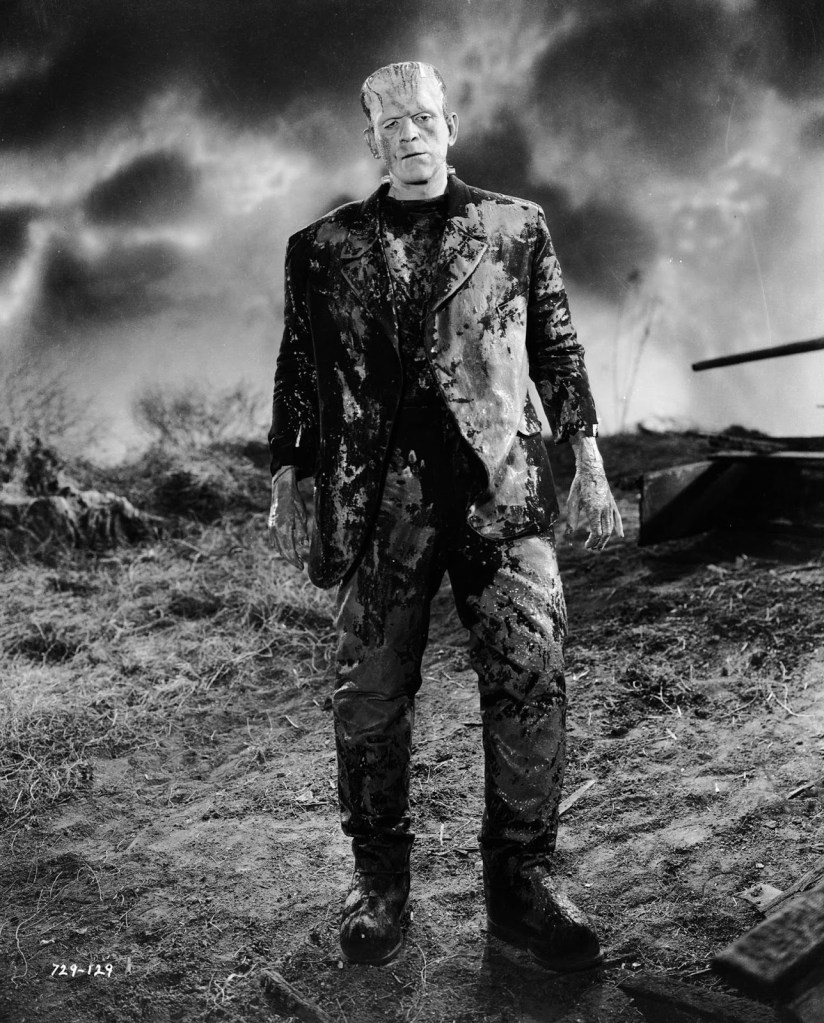
THE PROBLEM with AI-generated writing and art is it’s unnatural and inhuman. It’s a distorted version of human expression which can never be natural because of the way it’s created– akin to Frankenstein’s monster, when the monster’s creator seeks to play god and go beyond the bounds of the naturally possible into some untrod, uncertain, diabolical territory. Hellishness.

Study the ambitious characters pushing the technology and you see the extent to which they wish to bust natural bounds, no matter the consequences, like that character of plays and operas, Faust. They’re ready to make a Faustian deal. Some– like OpenAI CEO Sam Altman who has paid to have his brain uploaded to a computer– have already made the bargain.

THE RESULT for the rest of us is a bombardment of unnatural writing and art. Every bit as fiendish, lost, and rootless as the creature of Mary Shelley’s classic novel, first envisioned by her in a nightmare.


Words of the monster’s creator about what he made:

–a race of devils would be propagated upon the earth, who might make the very existence of the species of man a condition precarious and full of terror. Had I a right, for my own benefit, to inflict this curse upon everlasting generations? . . . I shuddered to think that future ages might curse me as their pest, whose selfishness had not hesitated to buy its own peace at the price perhaps of the existence of the whole human race.

(The novel, incidentally, is a stunning piece of writing, which could never be adequately captured by any film.)

The Save the Writer petition.