New Pop Lit’s Human Creativity Project

In the music industry over the past 45-plus years there’s been a steady effort to minimize the human element.
Here’s an example of a song, which rose to #2 in the Billboard charts in 1958, with minimal instrumentation– a few moments of a strumming guitar. Everything else is done by the human voice. (Even the “pop” sound.)
During the rock era, the electric guitar was king– but the emphasis remained on unique human skills: voice, movement and dancing, fingering a guitar, mouthing a saxophone, wielding sticks against drums, and other examples. Technology was used to enhance human performance, not replace it.
Here’s a performance by the Rolling Stones at the Marquee Club in London, England, in 1971. It’s electric alright, but the electricity is in the band itself:
WHEN did the tipping point begin to occur? Possibly in the early 1970s with the technical experiments and productions of Brian Eno. I prefer to mark the change with this 1985 quote by Dave Rimmer in his book Like Punk Never Happened, signifying the changeover of industry focus from artist to producer:
Frankie Goes to Hollywood illustrated a change of a different kind. Having kicked around for a year or two, trying to get noticed by being as outrageous as possible but failing to raise anything more than a passing interest from all the major labels, they were finally offered a deal by ZTT. It wasn’t much of a deal– £250 advance and a five per cent royalty– but they took it anyway. Once signed, they were denied even a semblance of control. Their music was taken in hand by Trevor Horn, who extracted the odd bits they liked and spent months putting together the rest by himself. Just about everything else– videos, record sleeves, T-shirts, adverts, books, sleeve notes and all the other things . . . were masterminded by budding McLaren and former NME journalist Paul Morley.
Today? Today pop music is an almost completely producer-controlled-and-choreographed enterprise. At the technical extreme are outfits like the Iklecktik Art Lab in London. Instead of watching Mick Jagger prancing around on stage backed by expert musicians, fans watch one or two tech geeks touching buttons on keyboards. There’s no performance whatsoever– you could be watching people typing on keyboards in an office, or a coffeeshop, or at a desk at home, with no practical distinction between “live” and recorded versions of the “music” (a series of electronic blips and bleeps) itself.
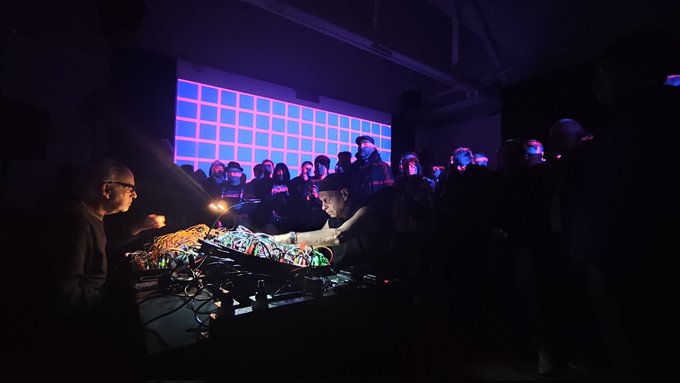
For producers, introducing AI into the mix is the next logical step. Just as a movie like the latest version of “Mission Impossible” is practically all CGI except for the actors– and producers want to substitute AI versions of the actors– so will the technician at the keyboard soon be replaced by an AI program, which will takeover the minimal task of manipulating buttons. For, presumably, greater savings for the producer. The goal: having one producer for an entire gigantic record company, playing all roles: owner, CEO, producer, and artist– of course taking every cent of profit and shred of credit for himself.
This should surprise no one. The frog (us) in the pot of heated water on the stove of technology is already 95% boiled. Now we’re talking about the last 5%.
(Sign the Save the Writer! petition.)
-KW with KMC

