WHAT’S WRONG WITH AMERICAN LITERATURE PART IV
FIRST FEAR: MIDDLEBROW
Many years ago, ridiculously-overrated English novelist Virginia Woolf wrote a defensive letter over a criticism of her work on a radio show(!) in which she scorned her critics as “middlebrow.” Her husband had her letter published in a collection of her writings after her death. Since then, established literary critics on both sides of the Atlantic have lived in fear of being thought of, or thought to be encouraging, or in any way associated with, “the middlebrow.” An excuse, really, for disconnecting themselves from the general public in order to remain in an artistic bubble.
In practice this has meant not aiming for the center, for a wide audience– and that writers like Ernest Hemingway who attained a wide audience despite their literary skill and intelligence have been downgraded as a result. The outcome for literature as an art form has been disastrous.
The fear is most pronounced among those critics who come from conformist middle-class backgrounds. Which means: all of them.
SECOND FEAR: SENTIMENT
To avoid sentiment and melodrama, authors have eliminated strong passion and emotion from their works. Subtle effects only. In practice: works which are restricted. Constipated. To instead be operatic in scope, expression, and theme? Nope. Can’t have it.
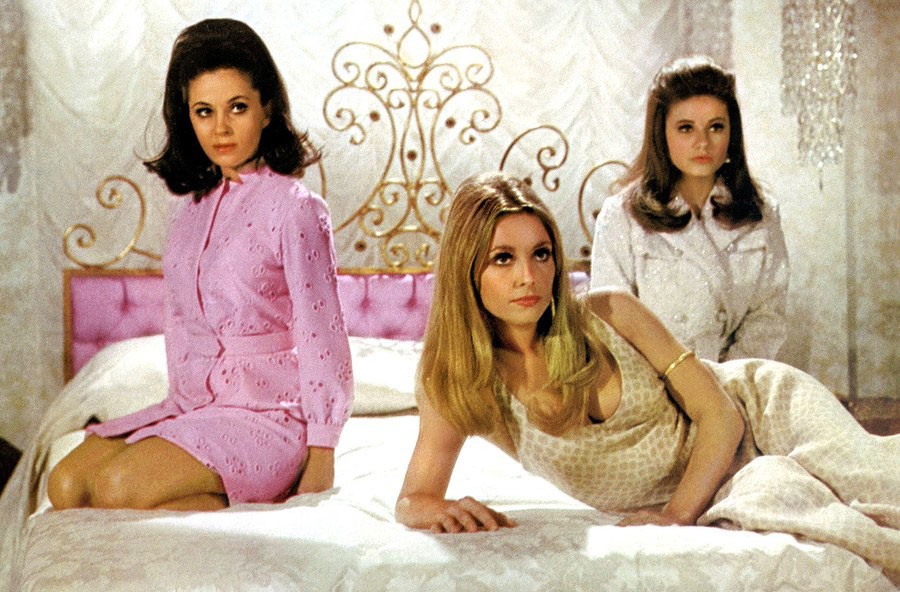
BUT the novels of Charles Dickens thrive on sentiment. Or what does one do with “the best worst movie ever,” 1967’s Valley of the Dolls? The flick has a bad screenplay, bad writing, bad direction, bad acting– its fans know this yet compulsively view it again and again. Why? Because of its over-the-top emotion, which strikes deep chords, despite all else, in we human beings.
No: Avoid sentiment. Play it safe. The result: More disaster.
THIRD FEAR: POP
Pop elements are also forbidden. Any of them. Anything too colorful, dramatic, or entertaining is not wanted. The approved literary reader is not supposed to be entertained. Speed and excitement? No. Action? NOT! “Lit-ya-chur” is serious business, made for committed slogs through densely written tomes while wearing determined frowns.
FOURTH FEAR: POLITICS
Finally, there’s the biggest fear: politics. Unless the politics is strictly in-line with an approved narrative issued by proper mandarins from on high. In practice this has meant an avoidance of ideas. No thrilling verbal exchanges expressing intellectual conflict. “One can’t use characters as mouthpieces for ideas,” I was told more than once by prominent literary personages. Uh, why not? “Fiction must never be polemical” founding Paris Review Editor George Plimpton himself told me in person more than twenty years ago, when we sat at a table at CBGB’s after a literary debate, drinking beer. (Which, brahmin New Englander that he was, he pronounced “be-ah.”) Did ol’ George have an agenda? Perhaps.
The extreme example of polemics and politics in fiction are the novels of Ayn Rand– anything can be pushed too far. But you know what? It worked. Readers for decades have thrilled to her one-sided diatribes and over-the-top plots. Their mistake wasn’t in enjoying the books, but in believing too-well what the characters said.
My own thinking: when you inject ideas, present more than one viewpoint.
As I do in a re-released 2012 ebook novel I’m currently hawking called The Tower. Available here.
(I need more clueless bad reviews of it. Or a few objective ones. Only 99 cents on Kindle. Weigh in!)
XXX
WHY is any of this important? It matters because the fundamental purpose of the New Pop Lit project is to provide a better “UX,” as techies say. A more exciting User Xperience. Literature that’s reader-centric. The only way forward. We’ll examine this further, at this site and elsewhere. Much more to come– in ideas, imagination, and ART.
-K. Wenclas